
Purple Sweet Potato Balls Recipe: A Colourful Singapore Twist
A practical guide to making purple sweet potato balls — a vibrant, naturally coloured snack inspired by Singapore's hawker culture and love for ubi keledek.
Ah Ma QQ Bowl
Published 18 June 2026
Why Purple Sweet Potato Balls Deserve a Spot on Your Table
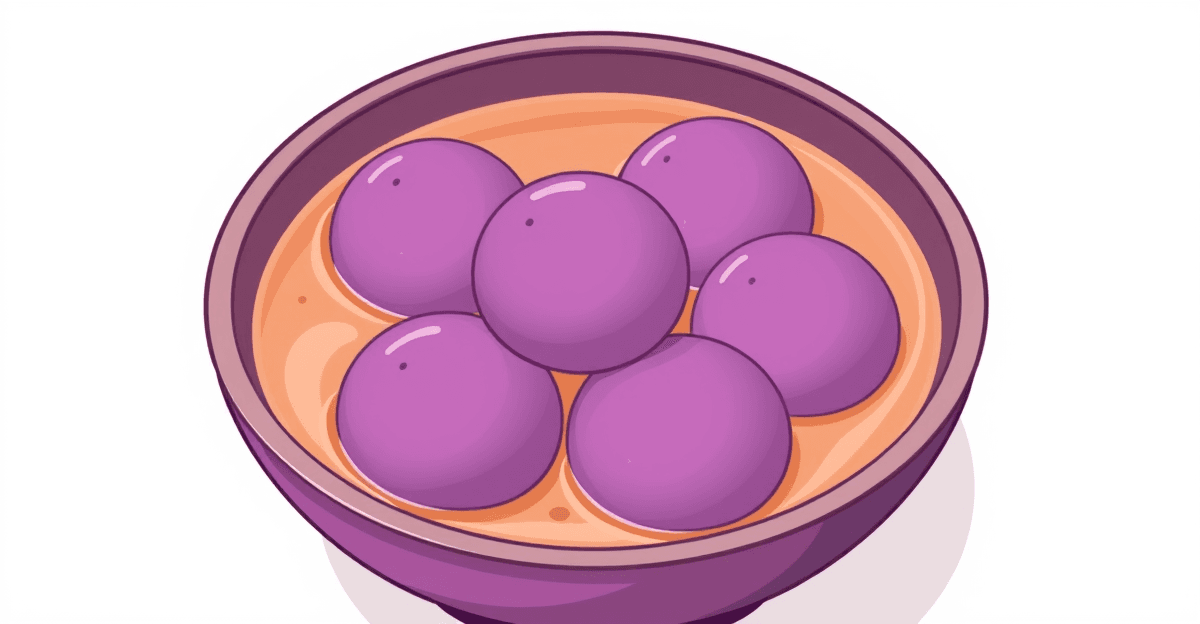
If you have ever enjoyed a warm bowl of sweet potato balls at a Singapore dessert stall, you know the magic of that soft, bouncy QQ bite in a lightly sweet soup. Now imagine those same comforting balls in a striking shade of purple — naturally coloured, subtly sweet, and every bit as satisfying.
Purple sweet potato balls take a beloved Southeast Asian dessert and give it a gorgeous makeover. The vibrant hue comes entirely from the flesh of purple sweet potatoes (known locally as ubi keledek ungu), which are rich in anthocyanins — the same antioxidants found in blueberries and red cabbage. No artificial food colouring required.
At Ah Ma QQ Bowl, we make our sweet potato balls the traditional way — gently boiled until soft and chewy, then served in a warm dessert soup. They are never fried. This is how the balls stay tender, keep their beautiful colour, and hold on to more of their natural goodness. Whether you are preparing them for a family gathering, a potluck contribution, or simply a weekend kitchen project with the kids, these little balls are surprisingly forgiving to make and almost impossible to stop eating.
Understanding the Key Ingredient
Purple sweet potatoes are widely available at wet markets and supermarkets across Singapore, often imported from Indonesia, Japan, or Australia. Two common varieties you will encounter are:
- Okinawan purple sweet potato — deep purple flesh with a dry, starchy texture that holds its shape well after mashing. This is the preferred choice for this recipe.
- Ube (Filipino purple yam) — while visually similar, ube is actually a yam with a more moist, sticky consistency and a distinctly floral flavour. It can work, but the texture of the final balls will be softer.
When shopping, look for firm tubers with no soft spots or sprouts. The skin may be beige, reddish, or purple depending on the variety — what matters is the flesh inside. If you are unsure, ask the vendor or break open a small piece to check the colour.
Equipment You Will Need
No specialist tools are required. Gather the following before you start:
- A large pot for boiling or a steamer
- A potato masher or fork
- A mixing bowl
- A pot of water for cooking the balls
- A slotted spoon or spider strainer
- A serving bowl for the dessert soup
The Recipe
Ingredients
| Ingredient | Amount | Notes |
|---|---|---|
| Purple sweet potato | 500 g | Peeled and cubed |
| Glutinous rice flour | 100 g | Also called sticky rice flour |
| Tapioca starch | 30 g | For extra chewiness |
| Caster sugar | 50 g | Adjust to taste |
| Salt | ¼ tsp | Balances sweetness |
| Warm water | 1–2 tbsp | Only if dough is too dry |
For the dessert soup (optional but recommended): 1 litre water, 3–4 slices fresh ginger, 60–80 g rock sugar or gula melaka (adjust to taste), and a knotted pandan leaf for fragrance.
Optional fillings: Red bean paste or mashed lotus paste work beautifully in the soft boiled balls.
Step-by-Step Instructions
Step 1: Cook the purple sweet potato
Cut the peeled sweet potato into roughly equal cubes (about 2 cm) so they cook evenly. You can either:
- Steam for 15–20 minutes until fork-tender (preferred — retains more flavour and keeps the dough drier), or
- Boil in water for 12–15 minutes, then drain thoroughly.
If boiling, make sure to drain the cubes very well and even let them sit in the colander for a few minutes. Excess moisture is the enemy of a good dough.
Step 2: Mash while hot
Transfer the hot sweet potato to a mixing bowl and mash until smooth. A few small lumps are fine, but large chunks will make it difficult to form uniform balls. Mashing while hot is important because the starches are more pliable and will integrate better with the flour.
Step 3: Mix the dough
Add the glutinous rice flour, tapioca starch, sugar, and salt to the mashed sweet potato. Mix with a spatula or your hands until a soft, pliable dough forms. It should feel like Play-Doh — smooth, not sticky, and easy to roll.
If the dough cracks when you try to shape it, add warm water a teaspoon at a time. If it is too sticky, dust in a little more glutinous rice flour. The exact ratio depends on how moist your sweet potatoes are, so trust your hands more than the numbers.
Step 4: Shape the balls
Pinch off a small portion of dough (about 20 g) and roll it between your palms into a smooth ball roughly 3 cm in diameter. If you are adding a filling, flatten the dough into a disc, place a small amount of filling in the centre, then seal and roll smooth.
Place the finished balls on a lightly floured tray. You should get approximately 25–30 balls from this batch.
Step 5: Prepare the dessert soup
Bring 1 litre of water to a gentle boil with the ginger slices, rock sugar (or gula melaka), and pandan leaf. Simmer for about 10 minutes until the sugar dissolves and the soup is fragrant. Taste and adjust the sweetness — it should be lightly sweet, never cloying, so the natural flavour of the purple sweet potato shines through. Keep the soup warm on low heat.
Step 6: Boil the balls until soft and chewy
Bring a separate pot of water to a rolling boil. Gently lower in 8–10 balls at a time — do not overcrowd. At first they will sink to the bottom. After a few minutes they will float to the surface, which is your signal that they are cooked through. Let them bob for another 1–2 minutes to firm up that bouncy QQ texture, then lift them out with a slotted spoon.
Cook the balls in batches this way. Boiling keeps them soft, tender, and beautifully purple — there is no frying, no oil, and no crispy shell, just the gentle chew that makes them so comforting.
Step 7: Serve warm in the soup
Transfer the freshly boiled balls into serving bowls and ladle the warm ginger-pandan soup over the top. Serve immediately, while the balls are at their softest and chewiest. They pair beautifully with a cup of hot tea, and taste wonderful alongside our other traditional dessert soups.
Tips for Perfect Results Every Time
- Do not skip the tapioca starch. It provides the chewiness that distinguishes these from ordinary mashed potato. Without it, the texture will be more cakey than QQ (the local term for that bouncy, springy mouthfeel).
- Watch for the float. The balls are cooked once they rise to the surface of the boiling water. Give them an extra minute or two after floating for the firmest, bounciest bite — but do not overcook, or they can turn mushy.
- Do not overcrowd the pot. Boil in small batches so the balls have room to move and cook evenly. Crowding drops the water temperature and can make them stick together.
- Make them uniform in size. This ensures even cooking. A kitchen scale is helpful if you want precision.
Variations to Try
Coconut milk soup: Instead of the ginger soup, serve the boiled balls in a warm coconut milk broth sweetened with gula melaka — a bubur-cha-cha-inspired twist that pairs wonderfully with the purple colour.
Black sesame finish: Roll the freshly boiled balls in toasted, finely ground black sesame while still warm. The nutty flavour complements the earthy sweetness of the purple potato.
Filled centres: Wrap a little red bean or lotus paste inside each ball before boiling for a warm, molten centre.
Mixed colour bowl: Boil a batch of purple balls alongside orange sweet potato and taro balls, then serve them together in one soup for a colourful, festive dessert bowl — a striking centrepiece for a party spread.
Storing and Reheating
Purple sweet potato balls are best fresh, but life happens. Here is how to handle leftovers:
- Room temperature: Cooked balls are good for up to 4 hours. Keep them in a little of the soup so they stay soft.
- Refrigerator: Store cooked balls in an airtight container with some soup for up to 2 days. To reheat, warm them gently in simmering soup for a minute or two until soft again. Avoid the microwave — it makes them rubbery.
- Freezer: Freeze the uncooked, shaped balls on a tray, then transfer to a freezer bag. Boil directly from frozen, adding 2–3 minutes to the cooking time. They keep for up to a month.
Frequently Asked Questions
Can I use regular orange sweet potato instead?
Yes. The technique is identical, and the flavour will be slightly sweeter. You will lose the purple colour, of course, but the taste and texture will still be excellent.
Why did my balls fall apart in the water?
The most common causes are: the dough was too wet (dust in a little more glutinous rice flour), the water was at too fierce a boil (keep it to a steady, gentle boil), or the balls had surface cracks before going in (smooth them out carefully during shaping).
Is glutinous rice flour the same as regular rice flour?
No, and this matters. Glutinous rice flour (made from sticky rice) gives the chewy, stretchy texture that defines this snack. Regular rice flour will produce a crumbly, brittle result. Check the packaging — glutinous rice flour is sometimes labelled as "sweet rice flour" or "mochiko."
Do I have to serve them in soup?
Not at all, though the warm dessert soup is the traditional way and keeps the balls soft and chewy. You can also toss the freshly boiled balls in a little gula melaka syrup, or roll them in ground toasted black sesame or grated coconut. They are always boiled, never fried.
Are purple sweet potato balls gluten-free?
Yes, provided you use pure glutinous rice flour and tapioca starch, both of which are naturally gluten-free despite the confusing name. Always check labels if you have a severe allergy, as some brands may process on shared equipment.
How many calories are in each ball?
Boiled purple sweet potato balls are roughly 45–55 calories each, depending on size. Because they are boiled rather than fried, they absorb no oil, which keeps them lighter than fried versions.
Can children help make these?
Absolutely. The shaping step is perfect for small hands — think of it as edible Play-Doh. Keep children away from the pot of boiling water, of course, but they can handle the mashing, mixing, and rolling with minimal supervision.
Final Thoughts
Purple sweet potato balls are one of those rare recipes that look impressive, taste wonderful, and require very little technical skill. The vivid colour sparks curiosity, the soft QQ texture keeps people reaching for more, and the whole process — from mashing to boiling — is genuinely enjoyable.
Give them a try this weekend. A warm bowl of homemade dessert soup awaits, right in your own kitchen.
If you would rather leave the mashing and rolling to us, Ah Ma QQ Bowl makes handmade sweet potato balls — always gently boiled, soft, and chewy — delivered fresh from our Hougang home kitchen.
Sources & References
- HealthHub Singapore – Live Healthy — Singapore's national health portal with evidence-based nutrition guidance.
- Health Promotion Board Singapore – Food & Beverage Healthy Living — Official Singapore guidance on healthier food choices and preparation methods.
- USDA FoodData Central – Sweet Potato Nutritional Profile — Reference nutritional composition data for sweet potatoes, including anthocyanin-rich purple varieties.
Craving sweet potato balls?
Ah Ma's handmade taro sweet potato balls in green bean soup — soft, chewy, naturally gluten-free, no preservatives. Made fresh in our Hougang kitchen.
Craving these? Order fresh from our Hougang kitchen
Soft, chewy sweet potato balls in warm green bean soup — handmade with real taro and green beans, no preservatives. Order online for delivery across Singapore.
Order NowRelated Articles
Complex Carbs in Desserts: Why Sweet Potato Beats Sugar
Complex carbs in desserts like sweet potato balls give Singapore dessert lovers slow-release energy, more fibre and less of a sugar crash. Here's why.
Sweet Potato Health Benefits: Why Singapore Families Love This Superfood
Discover why Singapore families love sweet potato—packed with vitamins, fiber, and antioxidants. Learn health benefits and how to enjoy them as dessert.
Sweet Potato Balls Singapore: The Complete Guide to This Beloved Dessert
Everything you need to know about sweet potato balls in Singapore — what they are, how they are made, where to order, flavours available, and why they are different from tang yuan.