
Best Home-Based Food Singapore 2026: Desserts You Need to Try
Discover Singapore's best home-based dessert businesses in 2026 — from traditional kueh to handmade sweet potato balls. SFA-registered, delivered to your door.
Ah Ma QQ Bowl
Published 3 May 2026
Something shifted in Singapore's food scene over the past few years. Walk through any HDB estate and there is a good chance someone on your floor — or the block next door — is running a home-based food business. The uncle making pineapple tarts every Chinese New Year now takes orders year-round. The auntie who used to bring ondeh ondeh to potlucks has an Instagram page with 3,000 followers.
TL;DR: Discover Singapore's best home-based dessert businesses in 2026 — from traditional kueh to handmade sweet potato balls. SFA-registered, delivered to your door.
Home-based food businesses are not new in Singapore. But in 2026, they have gone from a niche cottage industry to a legitimate part of how Singaporeans eat. And the dessert category, in particular, has exploded.
If you have not explored what Singapore's home-based dessert scene has to offer, you are missing out. Here is a guide to the best types of home-based desserts you can order right now — and why they are worth trying.
Why Home-Based Desserts Are Thriving in Singapore
Before diving into the categories, it helps to understand why home-based desserts have become so popular.
Small batch means higher quality. Home-based sellers typically produce in small quantities. There is no factory line. Every batch gets individual attention, and sellers can afford to use better ingredients because they are not optimising for mass-production margins.
Specialisation breeds expertise. Most home-based dessert businesses focus on one thing and do it exceptionally well. When someone dedicates their kitchen to perfecting a single dessert, the quality tends to surpass what you get from shops that make everything.
Direct relationship with the maker. You can message the person who made your food. Ask about ingredients, request modifications, or give feedback — and get a real response. That does not happen with commercial bakeries.
Heritage preservation. Many home-based food businesses are keeping traditional recipes alive. Desserts that were disappearing from hawker centres are finding new life in home kitchens run by people who learned recipes from their parents and grandparents.
The SFA Home-Based Food Business Scheme
A common concern about home-based food is safety. This is where Singapore's regulatory framework actually shines.
The Singapore Food Agency (SFA) requires home-based food businesses to obtain a licence before selling food to the public. The scheme mandates food safety training, proper hygiene practices, and compliance with ingredient sourcing standards. HDB homeowners must also ensure their food business falls within the guidelines set by HDB for residential properties.
What this means for you as a consumer: if a home-based business is SFA-registered, they have met a baseline of food safety standards. Always check for an SFA licence number before ordering — reputable sellers display this on their website or social media.
Traditional Heritage Desserts
This is where home-based businesses truly shine. Traditional Singaporean desserts that require patience, skill, and recipes passed through generations are the hardest to scale commercially — which is exactly why home kitchens produce the best versions.
Sweet Potato Balls and Traditional Soups
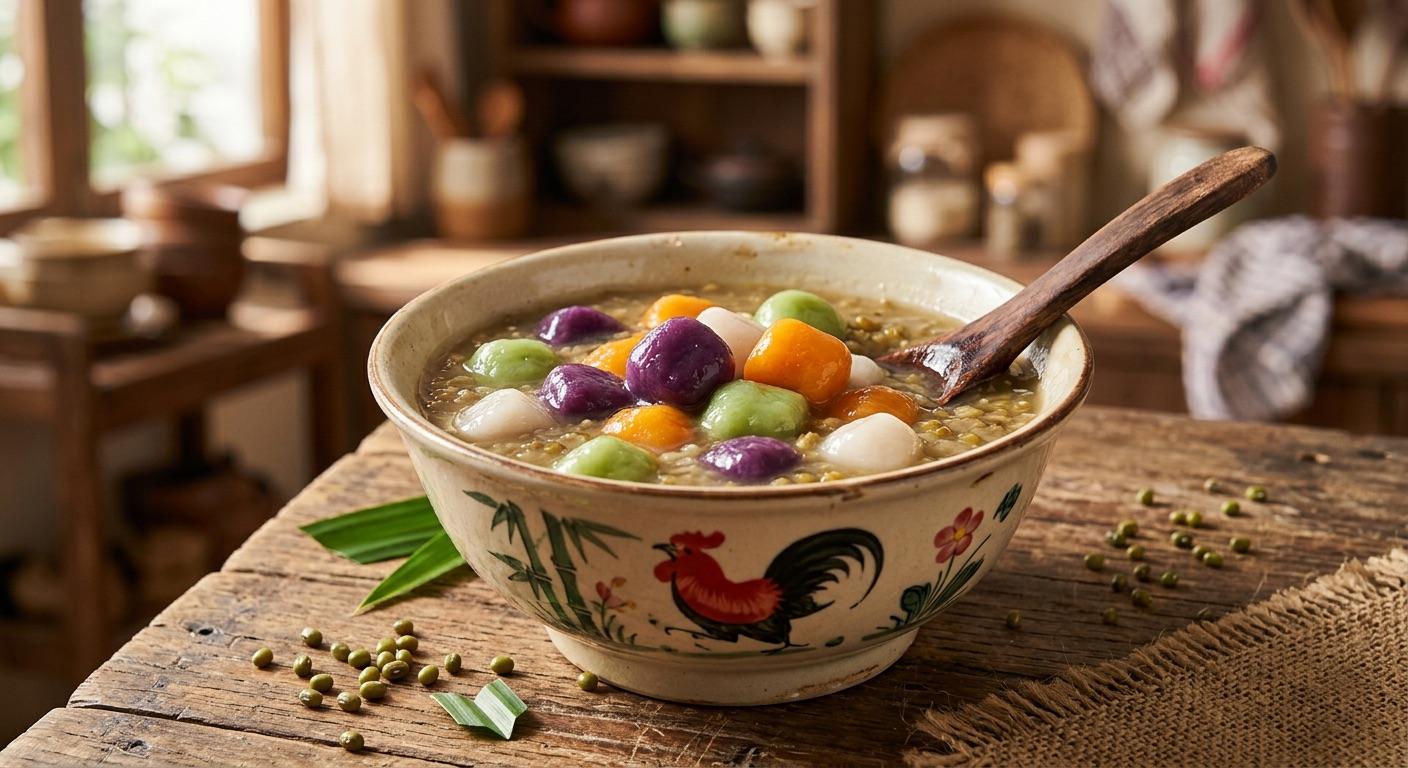
Handmade sweet potato balls — the soft, chewy kind with that signature QQ texture — are nearly impossible to find at hawker centres anymore. The time-intensive process of kneading sweet potato with tapioca starch, hand-rolling each ball, and slow-cooking green bean soup does not lend itself to high-volume hawker operations.
This is where Ah Ma QQ Bowl comes in. Based in a Hougang HDB kitchen, Ah Ma QQ Bowl produces handmade sweet potato balls and taro balls served in slow-cooked green bean soup. Every batch is made from scratch using real sweet potato, taro, and mung beans — no preservatives, no artificial colours, and naturally gluten-free.
What makes home-based sweet potato balls different from anything you find in a supermarket freezer is the texture. Mass-produced versions use shortcuts that compromise the QQ chewiness. When someone hand-kneads each batch in a home kitchen, you get the texture that your grandmother's version had.
Ah Ma QQ Bowl offers both ready-to-eat servings ($6) and frozen boxes ($13.90) with islandwide delivery. The frozen boxes are perfect for stocking up — just heat on the stove and serve.
Kueh
Traditional kueh — ondeh ondeh, ang ku kueh, kueh lapis, kueh salat — requires precise technique and fresh ingredients that degrade quickly. Home-based kueh makers who produce daily or on order consistently deliver fresher, more flavourful kueh than what sits in bakery display cases.
The best home-based kueh sellers often specialise. One might focus exclusively on ondeh ondeh with hand-grated coconut. Another might perfect nine-layer kueh lapis, spending hours getting each layer exactly right. This level of obsession produces kueh that tastes the way it should.
Bubur Cha Cha and Cheng Tng
Coconut-milk based dessert soups are experiencing a quiet renaissance through home-based businesses. These desserts are labour-intensive — cutting sweet potato, taro, and yam into cubes, cooking tapioca pearls, and preparing the coconut milk base — but they freeze and reheat well, making them practical for home-based delivery.
Artisan Cakes and Tarts
The home-based cake scene in Singapore has matured significantly. What started as home bakers making birthday cakes for friends has evolved into a full ecosystem of skilled bakers producing cafe-quality and beyond.
Burnt cheesecake became a gateway product for many home bakers. The Basque-style cheesecake's rustic appearance makes it forgiving for home production while rewarding quality ingredients. Many home-based versions use premium cream cheese and real vanilla, producing a richer result than what most commercial bakeries offer.
Tarts — Portuguese egg tarts, fruit tarts, and matcha tarts — are another home-baker strength. Small-batch production means the pastry is made fresh, and the fillings are baked to order rather than sitting in a display case.
Cookies and Biscuits
Singapore's home-based cookie scene is massive. From CNY pineapple tarts to American-style chunky cookies, this is one of the most competitive home-based food categories.
What sets the best home-based cookie sellers apart is ingredients and freshness. They use real butter (not margarine), high-quality chocolate, and fresh nuts. Cookies arrive warm or recently baked, which is a world apart from the packaged options at supermarkets.
Mochi and Japanese-Inspired Desserts
Mochi — particularly daifuku with fresh fruit fillings — has become a signature category for home-based dessert businesses. The soft, pillowy rice dough needs to be consumed within a day or two of production for the best texture, which gives home-based sellers a natural advantage over commercial producers who need longer shelf life.
Strawberry daifuku, mango mochi, and matcha mochi with red bean filling are perennial bestsellers. Some sellers also produce warabi mochi and other Japanese-inspired confections.
Ice Cream and Frozen Treats
Home-based ice cream makers in Singapore have carved out a niche between mass-market brands and premium creameries. Without the overhead of a shop, they can use higher-quality ingredients at more accessible price points.
Popular flavours lean into local tastes: gula melaka, pandan, salted egg yolk, teh tarik, and pulut hitam. Some producers also make gelato, sorbet, and ice cream sandwiches using homemade cookies.
Ondeh Ondeh and Pandan-Gula Melaka Specialities
The ondeh ondeh trend shows no signs of slowing down. Home-based sellers produce ondeh ondeh cakes, ondeh ondeh cookies, ondeh ondeh mochi, and the classic glutinous rice balls with liquid gula melaka centres.
The pandan-gula melaka flavour combination is essentially Singapore's answer to chocolate-vanilla — it works in almost every dessert format. Home-based businesses have been particularly creative with this pairing, producing everything from ondeh ondeh brownies to gula melaka drip cakes.
How to Order Home-Based Desserts in Singapore
If you are new to the home-based food scene, here is how to navigate it.
Discovery. Instagram is the primary platform. Search hashtags like #homebasedfoodsg, #sgdessert, and #sghomebaker. Telegram community groups also share recommendations and reviews. Facebook neighbourhood groups are useful for finding sellers near you.
Ordering. Most home-based sellers take orders through their website, Instagram DMs, or WhatsApp. Some use platforms like Oddle or Cococart for a more structured ordering experience. Ah Ma QQ Bowl takes orders directly through ahmaqqbowl.com/products.
Delivery. Expect delivery within 1-3 days for most sellers, same-day for some. Delivery fees typically range from $3 to $8. Many sellers offer free delivery above a minimum order value.
Payment. PayNow and bank transfer are the most common payment methods. Some sellers also accept GrabPay, credit cards through Stripe, or Shopee Pay.
Supporting Home-Based Food Businesses
When you order from a home-based food business, you are not just buying a dessert. You are supporting someone who chose to build something from their kitchen — often while juggling a full-time job or caring for a family. You are helping preserve food traditions that might otherwise fade. And you are getting food made with a level of care and attention that commercial operations struggle to replicate.
Singapore's home-based food scene is one of the best things about living here. The quality, variety, and passion that these small operations bring to the table is genuinely remarkable.
Start With Something Traditional
If you want to experience the best of what home-based desserts in Singapore have to offer, start with something traditional. A dessert that connects you to the heritage recipes that built Singapore's food culture.
Ah Ma QQ Bowl's handmade sweet potato balls are made fresh in small batches from a Hougang HDB kitchen. Real sweet potato. Real taro. Slow-cooked green bean soup. No preservatives, no shortcuts. Available as ready-to-eat servings or frozen boxes delivered islandwide.
Order now at ahmaqqbowl.com/products and taste what home-based food in Singapore is all about.
Sources
- SFA — Home-Based Food Business
- ACRA — Accounting and Corporate Regulatory Authority
- Enterprise Singapore
Looking for more? Check out find more food deals on WhyNotDeals.
Craving sweet potato balls?
Ah Ma's handmade taro sweet potato balls in green bean soup — soft, chewy, naturally gluten-free, no preservatives. Made fresh in our Hougang kitchen.
Frequently Asked Questions
Yes. Home-based food businesses are legal in Singapore under the Singapore Food Agency (SFA) licensing scheme. Operators must obtain a licence, follow food safety guidelines, and comply with HDB or URA regulations for their property type. This means any home-based food business you order from should be SFA-registered, ensuring proper hygiene and safety standards.
Look for their SFA licence number, which legitimate businesses display on their website, packaging, or social media pages. SFA-registered businesses follow mandated food safety protocols including proper ingredient sourcing, hygiene practices, and storage. Reviews on Google, Instagram, and Telegram community groups are also helpful for gauging quality.
Most home-based food businesses offer islandwide delivery, typically through their own logistics or third-party couriers. Delivery fees usually range from $3 to $8 depending on location and order size. Some sellers also offer free delivery above a minimum order. Ah Ma QQ Bowl, for example, delivers handmade sweet potato balls islandwide.
The range is wide: traditional kueh, artisan cakes and tarts, mochi, cookies, ondeh ondeh, sweet potato balls, brownies, cheesecakes, ice cream, and more. Many home-based sellers specialise in a single category and produce in small batches, which often means fresher products and more attention to quality than mass-produced alternatives.
Prices vary. Some home-based desserts cost more than supermarket equivalents because they use premium ingredients and are handmade in small batches. However, they are typically more affordable than cafe or bakery prices for comparable quality. For example, Ah Ma QQ Bowl's ready-to-eat sweet potato balls start at $6 per serving — competitive with hawker dessert prices.
Social media is the best discovery channel. Instagram hashtags like #homebasedfoodsg and #sghomebaker are popular. Telegram groups dedicated to home-based food share listings and reviews. Facebook community groups for specific neighbourhoods like Hougang, Sengkang, and Punggol also feature local home-based sellers regularly.
Craving these? Order fresh from our Hougang kitchen
Soft, chewy sweet potato balls in warm green bean soup — handmade with real taro and green beans, no preservatives. Order online for delivery across Singapore.
Order NowRelated Articles
Best Tang Yuan Alternatives in Singapore: Sweet Potato Balls and More
Craving a soft, chewy warm dessert? Discover the best traditional dessert alternatives in Singapore, from sweet potato balls to mochi desserts and more.
Office Party Desserts Singapore: 9 Potluck Picks (2026)
Planning office party desserts in Singapore? 9 potluck-proof picks — sweet potato balls, kueh lapis, cheng tng — that travel well and get finished first.
Chendol Guide Singapore: History, Best Spots and How It Compares to Other Desserts
Your complete chendol guide Singapore — discover its history, where to find the best bowls, and how this iconic dessert compares to other local sweet treats.