
Tau Huay Singapore: Calories, Benefits & Where to Buy Soy Beancurd
What is tau huay? Calories, protein and health benefits of Singapore's favourite soy beancurd — hot vs cold, how it's made, and where to buy handmade tau huay.
Ah Ma QQ Bowl
Published 4 May 2026 · Updated 22 September 2026
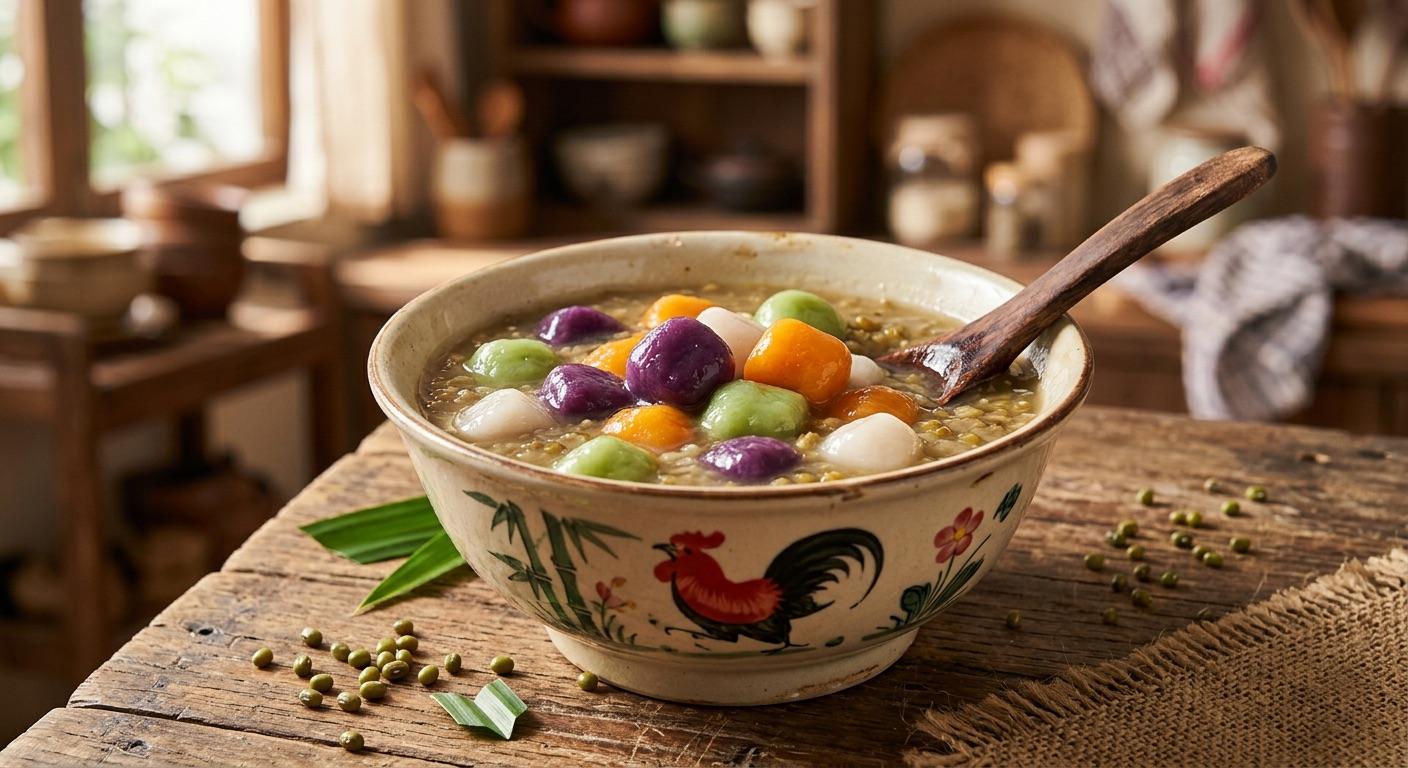
Tau huay (豆花) is soy beancurd: a silky, barely-set soybean custard eaten as a dessert, served warm with a ladle of ginger or sugar syrup, or chilled with a drizzle of sweet syrup. Known as dou hua in Mandarin and tofu pudding in English, it is one of Singapore's most quietly beloved desserts. It does not post well on Instagram. It does not come in twelve flavours with toppings stacked to the ceiling. It is that simple bowl -- and nothing more.
TL;DR: Everything about soy beancurd in Singapore -- where to buy tau huay, health benefits, hot vs cold, and how Ah Ma QQ Bowl makes traditional homemade soy beancurd with no preservatives.
And yet, for millions of Singaporeans, it is the dessert they return to again and again. After a heavy meal. On a sweltering afternoon. As a light supper. When nothing else satisfies. Tau huay is comfort in its purest form -- simple, honest, and deeply satisfying.
This guide covers everything about soy beancurd in Singapore: its history, health benefits, where to buy it, how it is made, and why the homemade version tastes nothing like the factory-produced tubs you find in supermarkets.
What Is Soy Beancurd?
Soy beancurd is a traditional Chinese dessert made from freshly ground soybeans, water, and a natural coagulant (typically food-grade gypsum or glucono delta-lactone). The soybeans are soaked overnight, ground into soy milk, boiled, and then set with the coagulant. The result is a smooth, silky custard that trembles on the spoon.
The texture is what sets soy beancurd apart from tofu. While tofu is pressed into blocks for cooking, soy beancurd is left in its delicate, just-set state. It should be soft enough to break apart with the edge of a spoon but firm enough to hold its shape when lifted. This perfect balance is what makes great tau huay so difficult to produce -- and why the best versions come from makers who do it by hand.
The History of Tau Huay in Singapore
Soy beancurd came to Singapore with early Chinese immigrants, particularly those from Fujian and Guangdong provinces. It was a working-class staple -- cheap, nutritious, and easy to make in large batches. Street hawkers would carry two wooden buckets on a bamboo pole: one filled with soy beancurd, the other with sugar syrup. They walked through neighbourhoods calling out their presence, and customers would come out with their own bowls.
By the 1960s and 1970s, tau huay stalls became fixtures in hawker centres across Singapore. Some of these stalls are still operating today, passed down through generations. The dessert has survived every food trend -- from bubble tea to Korean dessert cafes -- because nothing else fills its particular niche. When you want something light, clean, and gently sweet, tau huay is always the answer.
Was tau huay Lee Kuan Yew's favourite dessert?
It's a question many Singaporeans search for, so let's answer it honestly: there is no verified record that tau huay was founding Prime Minister Lee Kuan Yew's favourite dessert. His documented food preferences ran more towards hawker classics like chicken rice and Peranakan dishes. What is true is that tau huay was a beloved staple of Mr Lee's pioneer generation -- sold from shoulder-pole buckets and pushcarts across pre-independence Singapore -- which is probably why the association feels so natural. If any dessert deserves the title of "the people's dessert" from that era, it's this humble bowl of soy beancurd.
Health Benefits of Soy Beancurd
Soy beancurd is one of the healthiest traditional desserts you can eat in Singapore. Here is what a typical serving provides:
- High in plant protein -- soybeans contain all nine essential amino acids, making soy beancurd a complete protein source
- Low in calories -- a bowl of plain soy beancurd contains approximately 70-100 calories before syrup
- Rich in isoflavones -- soy isoflavones are associated with reduced risk of heart disease and improved bone health
- Naturally gluten-free -- suitable for people with coeliac disease or gluten sensitivity
- Dairy-free and vegan -- made entirely from plants
- Low glycaemic index -- the soy protein helps moderate blood sugar response
- Good source of calcium -- especially when set with gypsum (calcium sulfate)
The main health consideration is the syrup. Traditional ginger syrup adds sugar and calories. If you are watching your sugar intake, ask for less syrup or enjoy the soy beancurd plain -- it has a subtle, naturally sweet soybean flavour that stands on its own.
Tau Huay Calories and Protein: The Numbers
If you are tracking your intake, here are the figures for tau huay at a glance:
- Calories: A bowl of plain tau huay contains approximately 70-100 calories before syrup. The beancurd is mostly soy milk and water, so on its own it is light. A ladle of sweet syrup or ginger syrup typically adds another 50-80 calories.
- Protein: Plain soy beancurd provides roughly 5-9 grams of complete protein per bowl, because soybeans contain all nine essential amino acids.
- Fat and carbs: Plain tau huay is low in fat and carbohydrates -- most of the carbohydrate in a sweetened serving comes from the added syrup, not the beancurd itself.
In short, is tau huay healthy? Plain, it is one of the more nutritious desserts you can choose -- low in calories, high in plant protein, and free of dairy and gluten. The only thing that meaningfully changes the calorie count is how much syrup you add. Control the syrup, and you control the dessert.
Hot vs Cold Soy Beancurd
In Singapore, you will find soy beancurd served two ways:
Hot soy beancurd is the traditional Cantonese and Hokkien style. The beancurd is served warm, ladled from the pot it was set in, and topped with hot ginger syrup. The ginger adds a gentle warmth and spice that complements the mildness of the soybean. In Traditional Chinese Medicine, ginger syrup is considered warming and is thought to aid digestion.
Cold soy beancurd became popular in Singapore as a refreshing alternative for hot days. The beancurd is chilled and served with cold sugar syrup, sometimes with a squeeze of pandan for fragrance. The cold version highlights the silky smoothness of the beancurd -- the texture is almost like a very light panna cotta.
Both versions have their devotees. Many Singaporeans switch between hot and cold depending on the weather and their mood. There is no wrong choice.
How Traditional Soy Beancurd Is Made
The process of making soy beancurd is simple in principle but demands precision and patience:
- Soak the soybeans overnight -- dried soybeans are soaked for 8-12 hours until they double in size
- Grind and extract soy milk -- the soaked beans are ground with water and the liquid is strained through muslin cloth
- Boil the soy milk -- fresh soy milk is brought to a rolling boil to cook the proteins and remove the raw bean taste
- Prepare the coagulant -- food-grade gypsum (calcium sulfate) is mixed with a small amount of water
- Set the beancurd -- the hot soy milk is poured over the coagulant in one smooth motion and left undisturbed for 15-20 minutes
- Rest and cool -- the beancurd sets naturally as it cools, developing its signature silky texture
The critical step is the setting. Too much coagulant and the beancurd becomes firm and grainy like tofu. Too little and it will not set at all. The temperature of the soy milk, the speed of the pour, and the ratio of coagulant to soy milk all affect the final texture. This is why experienced tau huay makers produce a consistently superior product -- they have fine-tuned these variables over years of practice.
Factory vs Homemade Soy Beancurd
If you have ever bought a tub of soy beancurd from the supermarket and compared it to a freshly made bowl from a hawker stall, you know they are not the same food.
Factory-produced soy beancurd typically uses soy protein isolate or reconstituted soy milk rather than freshly ground soybeans. Stabilisers and thickeners are added to extend shelf life and ensure a consistent texture during transport. The result is a product that looks similar but tastes flat and has a slightly rubbery, uniform texture that lacks the delicate fragility of the real thing.
Homemade soy beancurd, made from whole soybeans ground fresh, has a richer soybean flavour, a more delicate texture, and a natural sweetness that factory versions cannot replicate. It is the difference between fresh-squeezed orange juice and juice from concentrate -- technically the same fruit, practically a different experience.
Soy Beancurd Toppings and Variations
While purists enjoy their tau huay plain with syrup, Singapore's hawker culture has produced several popular variations:
- Ginger syrup -- the classic. Hot ginger syrup with pandan-infused sugar
- White sugar syrup -- a simpler, cleaner sweetness for cold soy beancurd
- Red bean -- a spoonful of sweetened red beans adds texture and earthy sweetness
- Green bean -- sweet mung beans complement the soy beancurd beautifully (Ah Ma QQ Bowl's green bean soup pairs perfectly with soy beancurd)
- Grass jelly -- cubed grass jelly adds a contrasting dark, herbal element
- Sago -- small tapioca pearls for a bubble tea-like textural contrast
- Sweet potato balls -- QQ sweet potato balls dropped into a bowl of soy beancurd create a wonderful combination of silky and chewy textures
Where to Buy Soy Beancurd in Singapore
Hawker Centres and Traditional Stalls
Many hawker centres still have dedicated soy beancurd stalls. Look for stalls where the beancurd is freshly made daily in large clay or metal pots. The best stalls often sell out by early afternoon, so go early.
Home-Based Makers and Delivery
For convenience without sacrificing quality, home-based food businesses offer freshly made soy beancurd delivered to your door. Ah Ma QQ Bowl makes our soy beancurd fresh in small batches in Hougang, using whole soybeans and no preservatives. Order from our website for next-day delivery across Singapore.
Supermarkets
Supermarket soy beancurd is the most convenient option but the lowest quality. If you go this route, check the ingredients list -- the fewer ingredients, the better. Avoid products with a long list of stabilisers and emulsifiers.
Why Soy Beancurd Deserves More Recognition
In a food culture obsessed with novelty -- rainbow cakes, charcoal ice cream, mala everything -- soy beancurd endures because it delivers something none of these trends can match: quiet, everyday satisfaction. It is the dessert that tastes as good on the thousandth bowl as on the first. It costs almost nothing. It is healthy. It is vegan without trying to be. And when it is made well, the texture alone is worth the experience.
If you have not had a bowl of freshly made soy beancurd recently, you are missing one of Singapore's simplest and most rewarding food experiences. Try it from someone who makes it properly -- the difference will surprise you.
Explore our full range of traditional desserts including soy beancurd, sweet potato balls, and green bean soup. Tau huay also makes a wonderfully light option among Singapore's late-night supper desserts. Order for delivery across Singapore — everything is made fresh in our Hougang home kitchen.
Sources
Looking for more? Check out find more food deals on WhyNotDeals.
Craving sweet potato balls?
Ah Ma's handmade taro sweet potato balls in green bean soup — soft, chewy, naturally gluten-free, no preservatives. Made fresh in our Hougang kitchen.
Frequently Asked Questions
Yes. Soy beancurd is made from soybeans and water, making it naturally high in plant protein, low in calories (around 70-100 calories per bowl without syrup), and rich in isoflavones. It is naturally gluten-free, dairy-free, and vegan. The sugar syrup served alongside adds calories, but you can control the sweetness by adding less syrup. It is one of the healthiest traditional desserts in Singapore.
Soy beancurd (tau huay) and tofu are both made from soybeans, but they differ in texture and purpose. Soy beancurd is set very softly using a coagulant like gypsum, resulting in a silky, custard-like texture meant to be eaten as a dessert. Tofu is pressed firmer and used in savoury cooking. Think of soy beancurd as the dessert cousin of tofu -- same family, completely different experience.
Yes. Ah Ma QQ Bowl offers soy beancurd for delivery across Singapore. Our soy beancurd is made fresh with no preservatives. Order from ahmaqqbowl.com/products for next-day delivery.
A bowl of plain tau huay (soy beancurd) contains roughly 70-100 calories before any syrup is added. The beancurd itself is mostly soy milk and water, so it is naturally low in calories. The sugar syrup served alongside is what adds up — a typical ladle of sweet syrup or ginger syrup can add another 50-80 calories. To keep tau huay light, ask for less syrup or enjoy it plain, which lets the subtle natural soybean sweetness come through.
Tau huay is a good source of plant protein because it is made from soybeans, which contain all nine essential amino acids — making it a complete protein. A standard bowl of plain soy beancurd provides roughly 5-9 grams of protein depending on how concentrated the soy milk is. This is one of the reasons tau huay is considered one of the more nutritious traditional desserts: you get protein and isoflavones rather than empty sugar.
Yes — tau huay is one of the healthiest traditional desserts in Singapore. Plain soy beancurd is low in calories (around 70-100 per bowl before syrup), high in complete plant protein, naturally gluten-free, dairy-free and vegan, and rich in soy isoflavones linked to heart and bone health. The main thing to watch is the sugar syrup, which adds the calories. Eaten with light syrup or plain, tau huay is a genuinely wholesome dessert choice.
Both are traditional. Hot soy beancurd with ginger syrup is comforting on rainy days and is considered warming in Traditional Chinese Medicine. Cold soy beancurd is refreshing on hot afternoons. Most hawker stalls offer both options. At home, you can serve it either way depending on your mood and the weather.
Plain soy beancurd without added sugar is generally suitable for babies from around 8 months, once they have started solids and have no soy allergy. The soft texture makes it easy to eat. However, skip the sugar syrup for young children. Always check with your paediatrician if you are unsure about introducing soy to your child.
There is no verified record that tau huay was Lee Kuan Yew's favourite dessert — his documented preferences ran more towards chicken rice and Peranakan food. However, tau huay was a beloved everyday dessert of Singapore's pioneer generation, sold from shoulder-pole buckets and pushcarts across pre-independence Singapore, which is likely why the association is so widely searched.
Craving these? Order fresh from our Hougang kitchen
Soft, chewy sweet potato balls in warm green bean soup — handmade with real taro and green beans, no preservatives. Order online for delivery across Singapore.
Order NowRelated Articles
Late-Night Desserts Singapore: 10 Best Supper Sweet Treats (2026)
Craving a late-night dessert in Singapore? Here are the 10 best supper desserts — from soft, chewy sweet potato balls to warm green bean soup and tau huay — plus where to find midnight desserts or keep a stash at home.
QQ Texture Explained: Why Singaporeans Love Chewy, Bouncy Desserts (2026 Guide)
What does QQ mean in food? Learn why Singaporeans love chewy, bouncy textures in desserts like sweet potato balls, mochi, and tang yuan. The science behind the craving.
Children-Friendly Desserts That Are Nutritious
Looking for children-friendly desserts in Singapore that are nutritious? Discover wholesome, low-sugar treats kids love — from sweet potato balls to fruit bowls.